Launch offer — valid today only

📄 Digital book in PDF · read it on your phone or print it

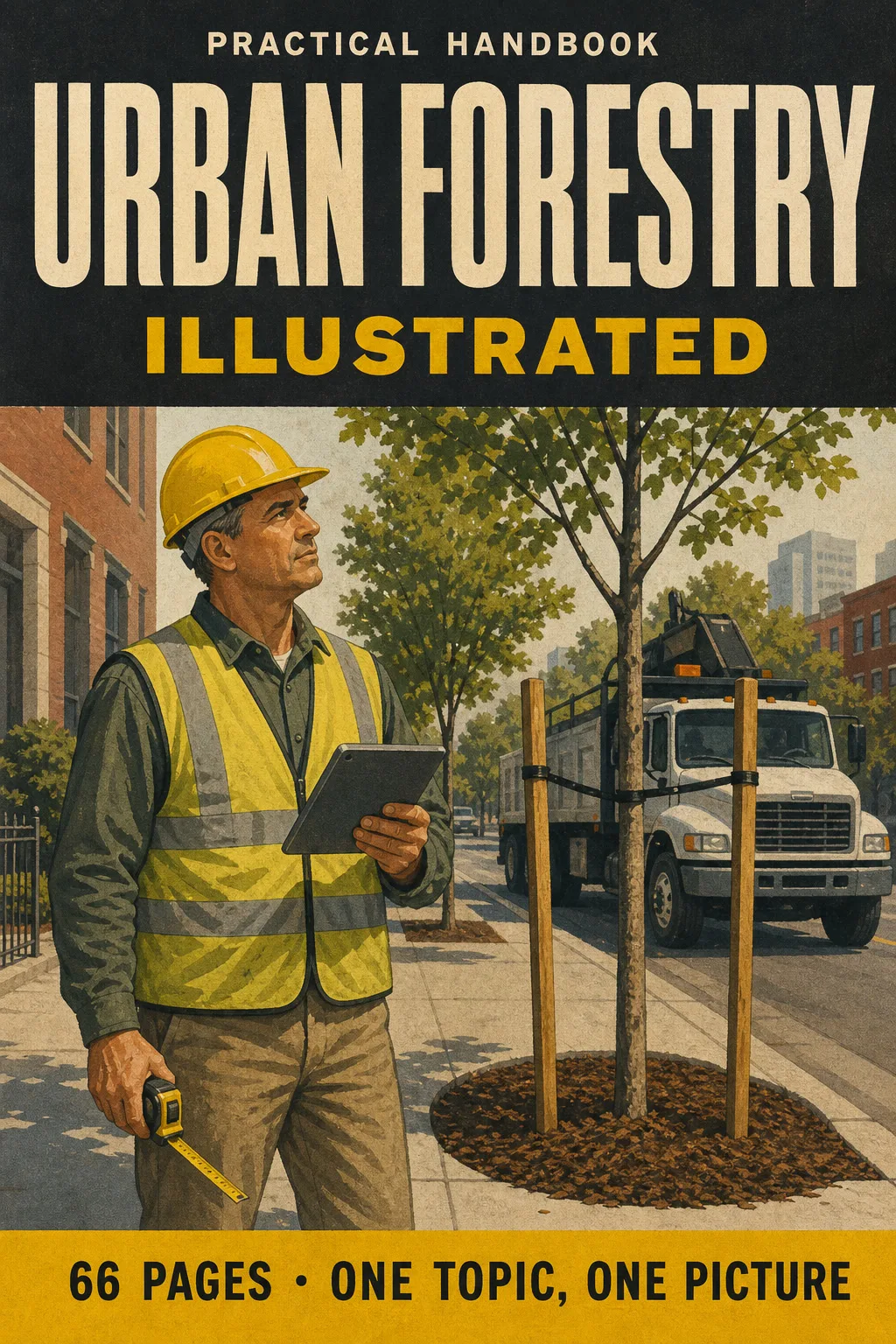
The Urban Forest Professional Exam, Illustrated: Risk Ratings, Pruning Cycles and Budgets You Can Work Out One Topic on Every Page

Tree biology, urban soils, rooting volume, risk matrices, utility clearance, canopy and inventory, ordinances, tree protection zones, management plans and budgets. Every topic gets its own page: the drawing first, then what you need to remember. 66 illustrated pages.

GET THE ILLUSTRATED BOOK

🔒 Secure checkout · PDF by email · 30-day guarantee

Every topic, its own pageEach standard, rule and calculation drawn, with the explanation right beside it
66 illustrated pages9 parts, from tree biology to the exam review
Up-to-date sourcesChecked against the ISA exam content outline, ANSI A300, ANSI Z133 and OSHA 29 CFR 1910.269
PDF by emailFormat

Look Inside the Book

Every page has one big drawing and a box with the numbers, rules and steps you need to know:

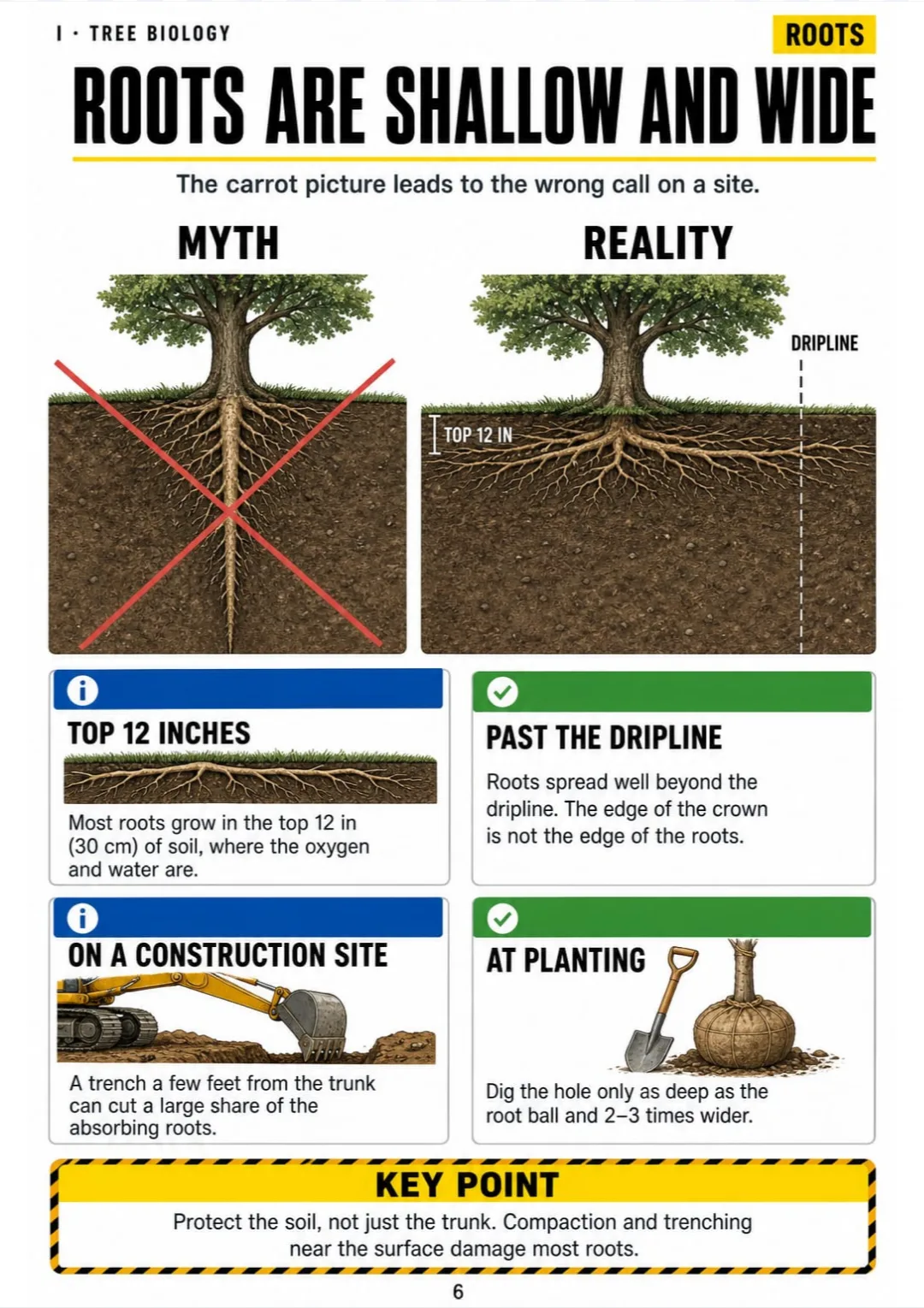
Most roots grow in the top 12 inches of soil and reach well past the dripline.
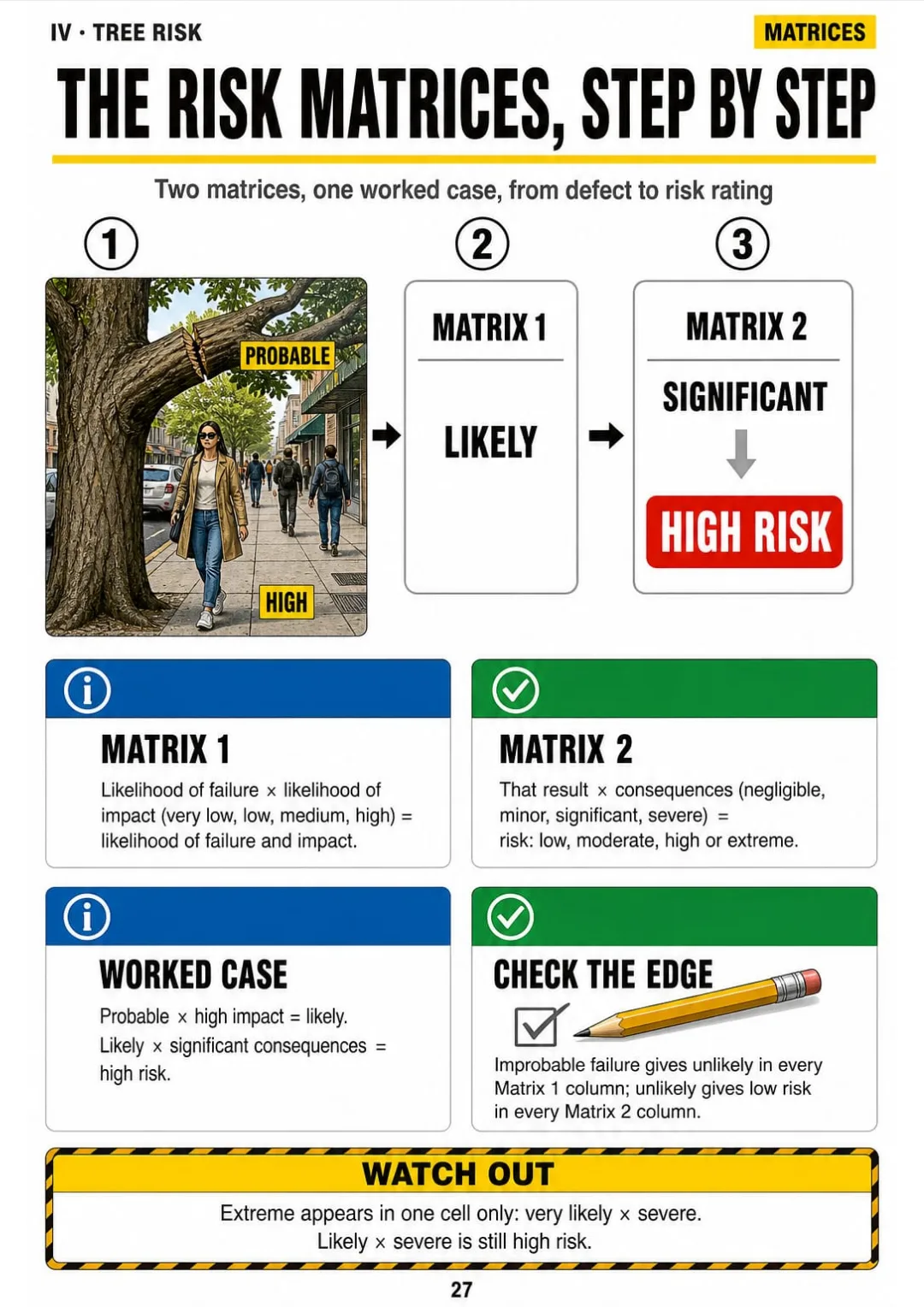
Matrix 1 × Matrix 2 worked case: probable + high impact = likely → likely + significant = high risk
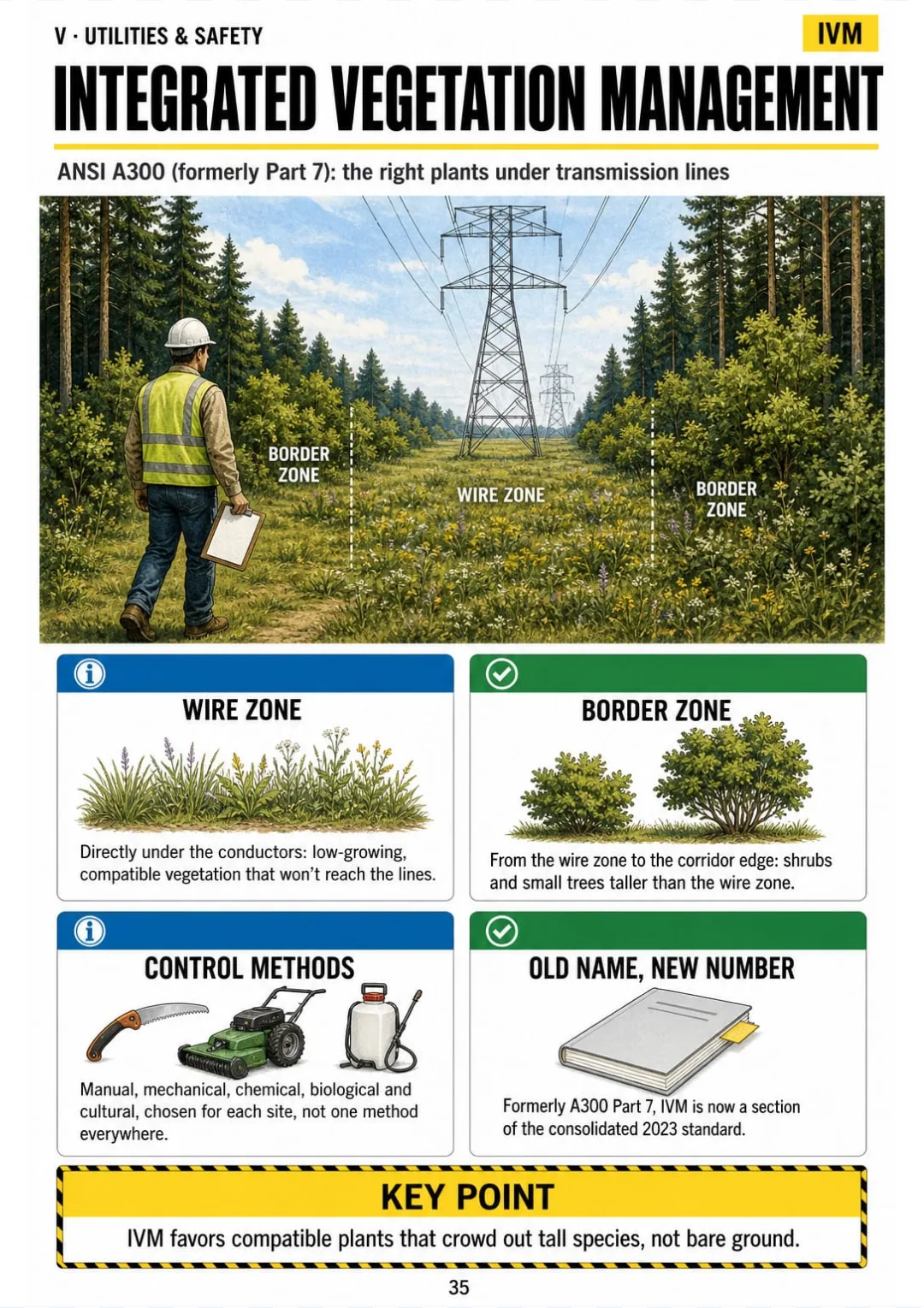
IVM under transmission lines: low wire zone, taller border zone, methods chosen by site
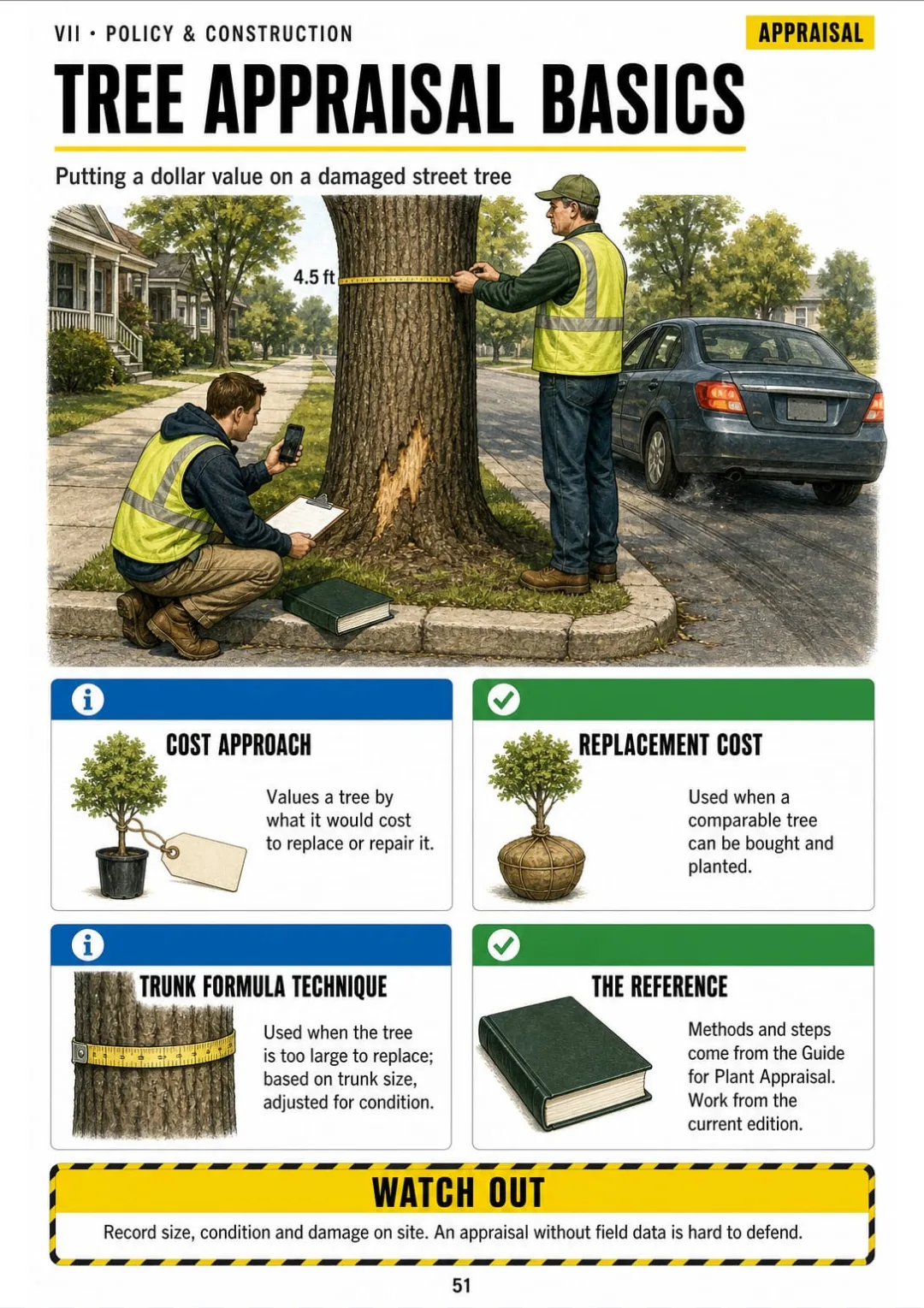
Cost approach, replacement cost and the Trunk Formula Technique, per the Guide for Plant Appraisal.
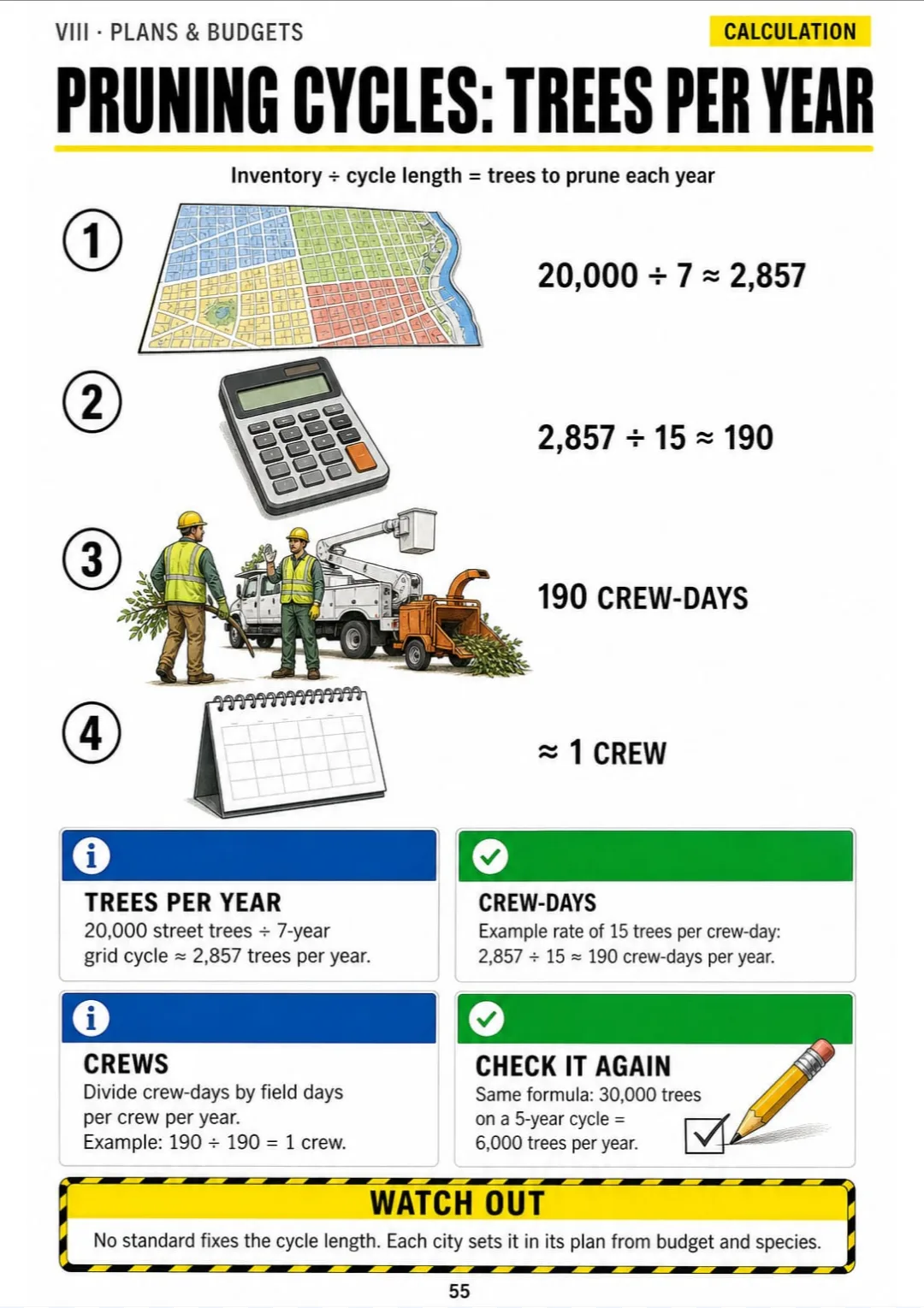
20,000 ÷ 7 ≈ 2,857 trees per year, turned into crew-days and crews
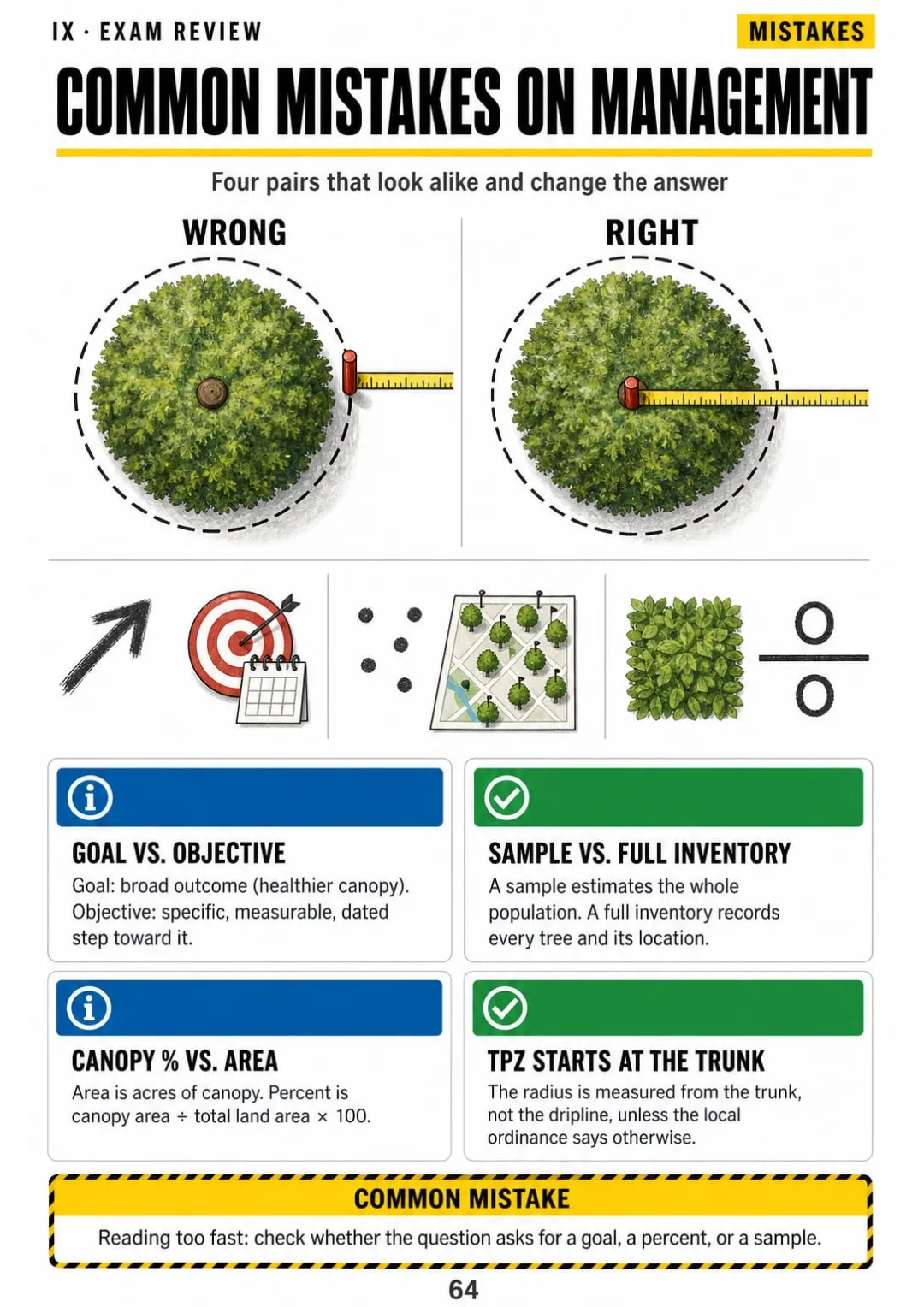
Goals vs. objectives, sample vs. full inventory, canopy % vs. area, TPZ from the trunk

Swipe to see more →

These are real pages from the book. The table of contents is the full one: 9 parts and 62 topics.

The Problem Isn't You. It's How It Was Explained to You.

You're looking at a practice question: a split codominant oak over a bus stop, and you have to give it a risk rating. You know the tree is bad. You can't say how bad on paper.

The material walks through the two matrices in long paragraphs: likelihood of failure, likelihood of impact, consequences. By the third sentence you've lost track of which matrix feeds which.

IVM under transmission lines: low wire zone, taller border zone, methods chosen by site

In the book, the risk matrices are one page. Matrix 1 sits next to Matrix 2 with a worked case: probable failure plus high impact gives likely, then likely plus significant consequences gives high risk. You just follow the arrow.

Structural pruning, the branch collar, IVM zones under transmission lines, pruning cycles and tree appraisal work the same way: each one has its own page.

You read the case, rate the tree and move on to the next question without going back to the manual.

COMPARE FOR YOURSELF

The Same Topic, Two Ways to Study It

THIS
  • The manual: line after line of text
  • Pruning techniques explained only in words
  • You walk into the exam with doubts
An urban forest management plan establishes the long-term vision for the municipal tree resource and translates it into measurable objectives aligned with community values and available funding. It is informed by a current tree inventory and canopy assessment, which characterize species composition, age distribution, condition and maintenance needs. From these findings, management goals are prioritized, pruning and removal cycles are scheduled, staffing and contract requirements are estimated, and an annual budget is developed, with performance metrics established to evaluate progress and support periodic revision of the plan.
FOR THIS
  • Structural pruning in one drawing: the single leader marked
  • Codominant stems: reduce or remove, shown with arrows
  • Scaffolds spaced up and around the trunk, at a glance
Matrix 1 × Matrix 2 worked case: probable + high impact = likely → likely + significant = high risk
CONTENTS

Take a Look at the 9 Parts and 62 Topics

Tree biology, urban soils and planting, tree care standards, risk assessment, utilities and safety, inventory and canopy, policy and construction, management plans and budgets, and the exam review: 66 pages, all illustrated.

ITree Biology for the City · pp. 5-10
  1. Inside the Trunk: Bark, Phloem, Cambium, Xylem
  2. Roots Are Shallow and Wide
  3. Photosynthesis, Energy Reserves and Stress
  4. CODIT: How Trees Wall Off Decay
  5. Branch Collar and Branch Bark Ridge
  6. Tree Growth Responses in the Urban Environment
IIUrban Soils and Planting · pp. 11-17
  1. Soil Texture, Structure and Pore Space
  2. Compaction and Bulk Density
  3. Rooting Volume: How Much Soil a Tree Needs
  4. Structural Soils and Suspended Pavement
  5. Planting and Transplanting to ANSI A300
  6. Nursery Stock Quality and Inspection
  7. Mulch, Watering and Establishment
IIITree Care Standards · pp. 18-23
  1. ANSI A300 at a Glance: What Each Section Covers
  2. Pruning Objectives and Types
  3. Structural Pruning of Young Trees
  4. How Much Live Tissue to Remove
  5. Cabling, Bracing and Supplemental Support
  6. Integrated Pest Management (IPM) in the City
IVTree Risk Assessment · pp. 24-30
  1. Three Levels of Assessment
  2. Targets and Occupancy Rate
  3. Likelihood of Failure
  4. The Risk Matrices, Step by Step
  5. Common Defects and What They Mean
  6. Mitigation Options and Residual Risk
  7. Storm Preparedness and Response
VTrees, Utilities and Safety · pp. 31-37
  1. ANSI Z133: The Safety Standard on One Page
  2. Qualified vs. Unqualified Workers Near Lines
  3. Minimum Approach Distances
  4. Directional Pruning and V-Out Cuts
  5. Integrated Vegetation Management (ANSI A300)
  6. Right Tree, Right Place Under Lines
  7. Work Zone Setup and Traffic Control
VIInventory, Canopy and Benefits · pp. 38-45
  1. Full Inventory vs. Sample Inventory
  2. What a Street Tree Inventory Records
  3. GIS for Urban Forestry
  4. Measuring Urban Tree Canopy
  5. Canopy Goals and Equity
  6. Species Diversity: The 10-20-30 Guideline
  7. Age Structure and Replacement
  8. Ecosystem Services and the i-Tree Tools
VIIPolicy, Ordinances and Construction · pp. 46-52
  1. How a Tree Ordinance Is Built
  2. Public Trees, Private Trees and Liability
  3. Tree Protection Zone: Measuring the Radius
  4. Managing Trees During Construction (ANSI A300)
  5. Root Pruning and Trenching Alternatives
  6. Tree Appraisal Basics
  7. Recognition Programs and Tree Boards
VIIIManagement Plans, Budgets and Contracts · pp. 53-60
  1. The Parts of an Urban Forest Management Plan
  2. Writing SMART Goals for the Urban Forest
  3. Pruning Cycles: Trees per Year
  4. Reactive vs. Proactive Maintenance
  5. Building an Annual Budget
  6. Specifications, Bids and Contracts
  7. Work Orders and Performance Metrics
  8. Communication, Public Outreach and Partners
IXExam Review · pp. 61-66
  1. The Exam Content Outline on One Page
  2. The Numbers to Know
  3. Acronyms and Standards Decoded
  4. Common Mistakes on Management Questions
  5. Worked Problems: Calculation Review
  6. Last-Week Study Plan

One Page, One Topic, All Clear

Think of it this way:

A crew is about to trench for a new sidewalk next to a 20-inch street oak, and someone asks you how far out the protection zone goes. You need the answer right there, on site.

You open the book to the tree protection zone page and see the circle drawn around the trunk, the radius measured from the trunk, and a worked example in feet right beside it.

20,000 ÷ 7 ≈ 2,857 trees per year, turned into crew-days and crews

Rooting volume, the risk matrices, minimum approach distances, the 10-20-30 guideline and pruning cycles work the same way: each one on its own page.

Urban Forestry Illustrated is 9 parts and 66 illustrated pages, all drawn, and it ends with an exam review: the numbers to know, acronyms decoded and worked calculation problems.

What you see drawn, you don't have to memorize.

What's Inside Urban Forestry Illustrated:

Ipp. 5-10

Tree Biology for the City

Bark, phloem, cambium and xylem, shallow wide roots, energy reserves and stress, CODIT, the branch collar and how trees respond to the city.

IIpp. 11-17

Urban Soils and Planting

Soil texture and pore space, compaction, rooting volume, structural soils and suspended pavement, planting, nursery stock and establishment.

IIIpp. 18-23

Tree Care Standards

ANSI A300 part by part, pruning objectives and types, structural pruning of young trees, how much live tissue to remove, support systems and IPM.

IVpp. 24-30

Tree Risk Assessment

The three levels of assessment, targets and occupancy, likelihood of failure, the risk matrices step by step, defects, mitigation and storm response.

Vpp. 31-37

Trees, Utilities and Safety

ANSI Z133 on one page, qualified vs. unqualified workers, minimum approach distances, directional pruning, IVM, right tree right place and work zones.

VIpp. 38-45

Inventory, Canopy and Benefits

Full vs. sample inventory, what to record, GIS, measuring canopy, canopy goals and equity, the 10-20-30 guideline, age structure and ecosystem services.

VIIpp. 46-52

Policy, Ordinances and Construction

How an ordinance is built, public vs. private trees and liability, the TPZ radius, construction, root pruning alternatives, appraisal and tree boards.

VIIIpp. 53-60

Management Plans, Budgets and Contracts

The parts of a management plan, SMART goals, pruning cycles, reactive vs. proactive work, the annual budget, bids and contracts, metrics and outreach.

IXpp. 61-66

Exam Review

The content outline on one page, the numbers to know, acronyms decoded, common mistakes on management questions, worked problems and a last-week plan.

At the end of the book: An exam review part with the numbers to know, acronyms decoded, worked calculation problems and a last-week study plan.
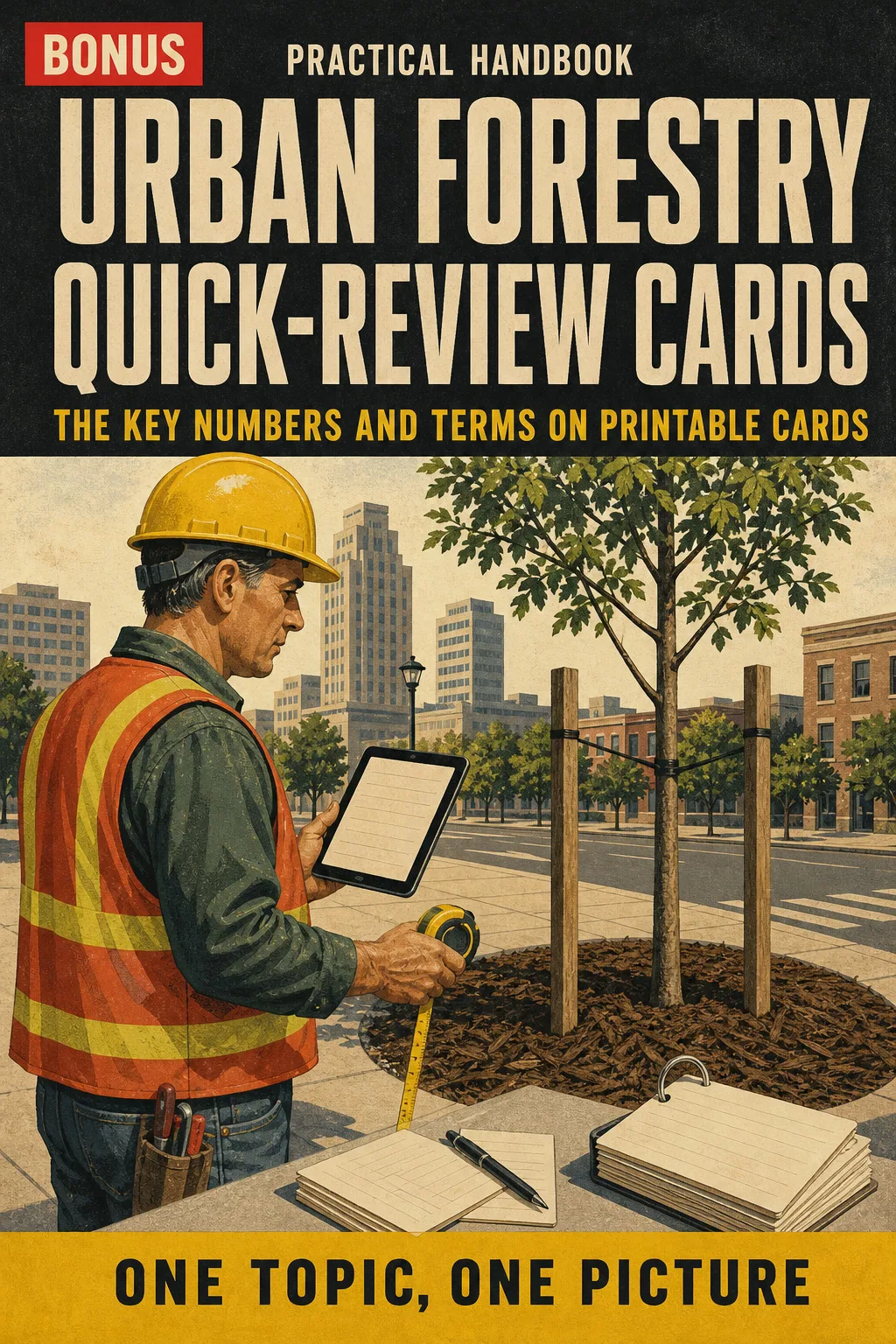
Plus: 2 Free Books

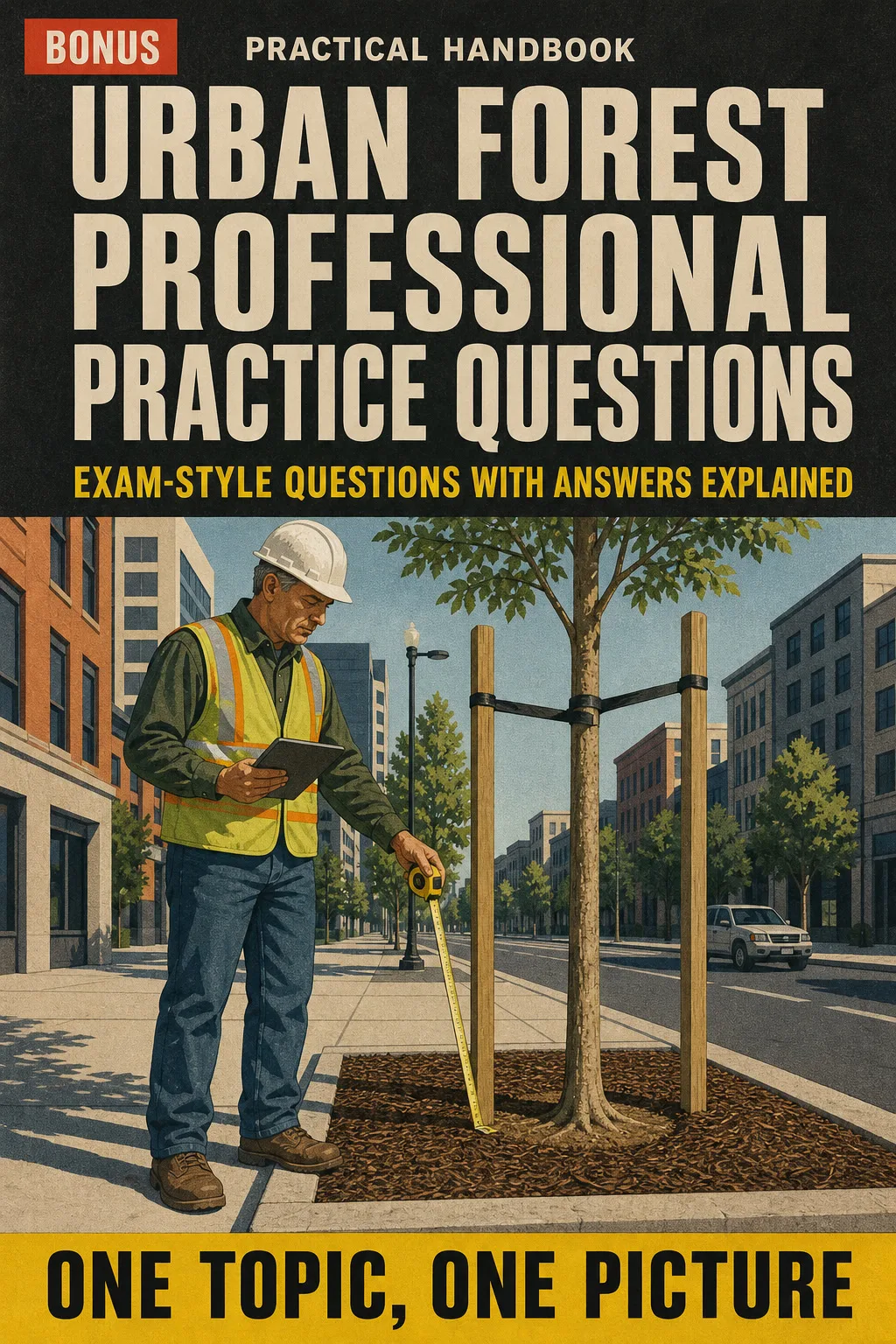
Urban Forest Professional Practice Questions: exam-style questions with answers explained

BONUS 1: «Urban Forest Professional Practice Questions: exam-style questions with answers explained»

Value on its own: US$ 17.90

Test yourself topic by topic and see why each answer is right, so you find your weak spots before exam day.

Urban Forestry Quick-Review Cards: the key numbers and terms on printable cards

BONUS 2: «Urban Forestry Quick-Review Cards: the key numbers and terms on printable cards»

Value on its own: US$ 14.90

Every number, standard and term you need to review, on cards you can print and go over in 10 minutes in the truck or before a shift.

Urban Forestry Illustrated with 2 Free Books

  • Urban Forestry Illustrated: 66 illustrated pagesUS$ 63
  • BONUS 1: Urban Forest Professional Practice Questions: exam-style questions with answers explainedUS$ 17.90
  • BONUS 2: Urban Forestry Quick-Review Cards: the key numbers and terms on printable cardsUS$ 14.90
  • High-resolution PDF to printIncluded
Total value US$ 95.80
YOUR PRICE:
US$ 27
You save US$ 68.80
YES, I WANT URBAN FORESTRY ILLUSTRATED FOR US$ 27

📄 This is a digital PDF book sent to your email: nothing is printed or shipped.

Secure purchaseEncrypted payment30-day guarantee

PDF by email: We email you Urban Forestry Illustrated as a PDF, together with the two free books. It's a single payment: no installments, no extra charges.

Who This Book Is For

You're studying for the exam

You're studying for the exam

The management side you never did in the field (plans, budgets, inventories, ordinances) laid out one drawing per page, in the same order every time.

Your exam date is close

Your exam date is close

The exam review part and the quick-review cards put the numbers, standards and acronyms in one place, so you can go over them at a glance before a shift.

You already run the street trees

You already run the street trees

A printed reference for the truck or the office: TPZ radius, pruning cycles, risk matrices and budget steps, ready when a crew or a resident asks.

Everything You Get Today

US$ 95.80US$ 27
YES, I WANT URBAN FORESTRY ILLUSTRATED FOR US$ 27

📄 This is a digital PDF book sent to your email: nothing is printed or shipped.

30DAYS
GUARANTEE

30-Day Guarantee

Try Urban Forestry Illustrated for 30 days, bonus books included.

We refund everything if the file won't open, if the book isn't what you see here, if you were charged twice or if the email doesn't arrive. Just email us.

You pay once. No subscriptions.

Frequently Asked Questions

Is it for me if I've worked as a field arborist for years and the management side is new to me?

Yes. It isn't a beginner's book: it assumes you know trees and spends its pages on what the exam adds, like plans, budgets, inventories, ordinances and risk ratings, with worked examples in feet and cubic feet.

Where does the content come from?

It's built on the exam content outline ISA publishes for the Urban Forest Professional credential, not on old Municipal Specialist material, and checked against the current editions of ANSI A300 and ANSI Z133, OSHA 29 CFR 1910.269 and the Guide for Plant Appraisal. It's written in our own words and drawings, with no text copied from the standards.

Is this official material?

No. It's an independent study guide, not affiliated with or endorsed by ISA, and it doesn't replace the official study materials. What it adds is the format: each topic on one page, with a drawing and a box of numbers, plus worked problems in feet and cubic feet, so the management side still makes sense the morning after a long shift.

Does it replace a course or formal training?

No. It's a study aid. It doesn't give a certificate or CEUs, and it doesn't replace training, field experience or qualified line clearance training. The work near power lines described here is for study only.

Are the practice questions the actual exam questions?

No. They're written for this book in the style of the exam, with each answer explained. They aren't official questions from any exam.

When and how do I get it?

The book and the 2 bonus books come as PDFs by email, sent to the address you enter at checkout.

Do I have to pay every month?

No. It's a one-time payment with no subscription.

Can I have it on paper?

Yes. It's a PDF you can print at home or at a print shop and keep in the truck.

How does the refund work?

You have 30 days. We refund everything if the file won't open, if the book isn't what you see on this page, if you were charged twice or if the email doesn't arrive: just email us.

Before You Close This Page

No more rereading with nothing sticking.

You see the risk matrices drawn, and you've got them.

You walk into the exam knowing where everything is.

Drawings make studying faster.

The book is right below.

One-time payment: US$ 27 · Guarantee: 30 days · PDF by email

YES, I WANT URBAN FORESTRY ILLUSTRATED FOR US$ 27

📄 This is a digital PDF book sent to your email: nothing is printed or shipped.